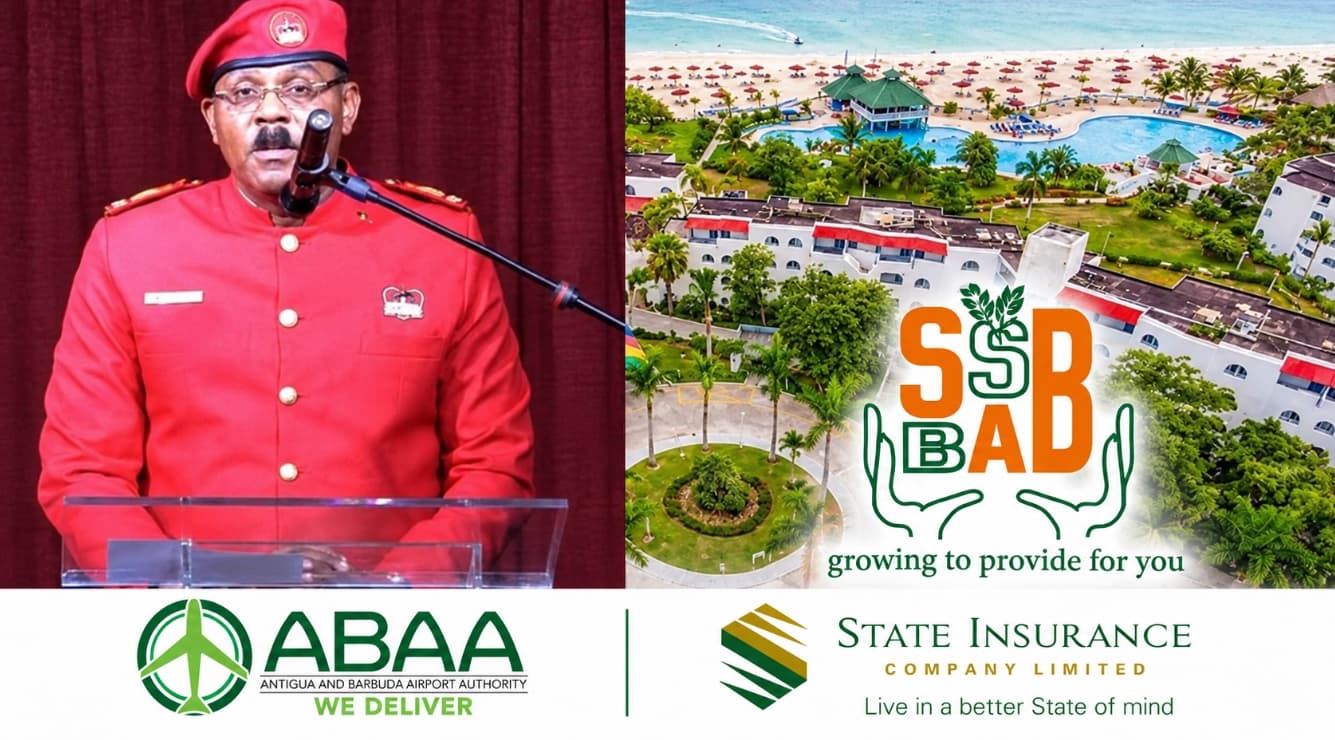
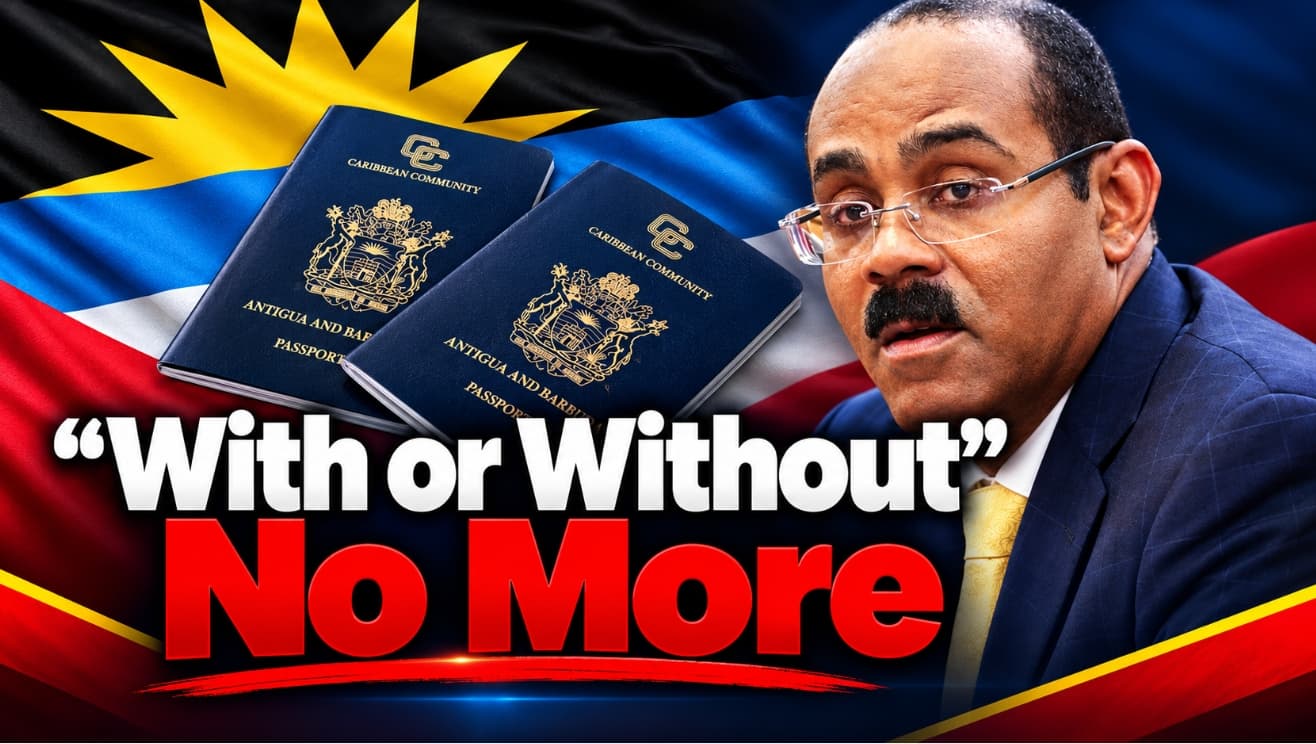
Less than three weeks after Prime Minister Gaston Browne stood in Parliament and admitted that public outrage had forced his government to shelve the transfer of the Jolly Beach Resort to the Social Security Scheme, he has unveiled a new plan to reach into the coffers of the people's institutions — this time proposing that up to $60 million be drawn from the Treasury, Social Security, State Insurance and the Antigua and Barbuda Airport Authority to build two hotels.
The proposals are expected to go before Cabinet on Wednesday, 28 October. Each development would carry approximately 150 rooms: one on lands in the Greenfield area at Jolly Beach and the other at Yeptons, where part of a parcel the government acquired through an arrangement with Global Bank was sold to developer Patrice 'Baba' Luke.
PM Browne outlined how much money would be taken from each statutory body for his proposal: between $10 million and $20 million from the Treasury, $10 million from State Insurance, between $10 million and $20 million from Social Security, and a further $10 million from the Airport Authority — a combined $40 million to $60 million in public money, depending on what each institution commits.
"I can pick up the phone Monday morning and raise $60 million," the Prime Minister declared, adding that private investment of $20 million to $30 million — including from Luke, whom he said was contacted on Friday and has expressed interest — could push the total war chest for the two projects to roughly $80 million. PM Browne framed the venture as a strike against what he called an "extractive economy" in which foreign hotel owners repatriate their profits, arguing that domestic ownership would keep tourism earnings at home. If Cabinet approves, he hopes to see the hotels completed within about two years.
Big Numbers, Few Answers
What the Prime Minister did not say is as telling as what he did. PM Browne gave no indication of whether the institutions would take equity stakes in the hotels or merely lend money; what returns they should expect; whether their governing boards have even been approached; or whether a single formal investment assessment has been completed. The financial viability of the two hotels, by his own account, is a question Cabinet will only begin to examine on Wednesday.
In other words, the Prime Minister announced the sources of the money before the institutions that hold that money and the boards legally charged with safeguarding it were presented with a proposal to evaluate. It is a sequence Antiguans and Barbudans have seen before, and recently.
A Familiar Script: The $75 Million Jolly Beach Retreat
The new announcement lands just several days after the Prime Minister's extraordinary concession at Prime Minister's Questions on 5 October that his signature plan for Jolly Beach had collapsed under the weight of public resistance — a retreat comprehensively documented by Real News.
That earlier scheme, first announced in June 2025, would have seen $75 million in Social Security funds injected into the Jolly Beach property, with the resort itself vested in the Scheme in exchange for writing down a portion of the government's non-performing EC$330 million bond debt to the fund at a set-off value of EC$137.7 million. The government branded it a "strategic imperative." The opposition, pensioners, professionals and ordinary contributors branded it something else.
Opposition Leader Jamale Pringle demanded in Parliament, "Where is the evaluation of Jolly Beach?" — a question never answered, even as a former shareholder valued the entire 25-acre property at scarcely $30 million. Barbuda MP Trevor Walker pointed out that members were being asked to vote without the fund's audited statements, actuarial reviews or any recommendation from the Social Security Board itself. Then-MP Sherfield Bowen, an attorney and accountant, argued the fund was effectively insolvent and had no business making any major commercial bet. And former Finance Minister Harold Lovell condemned the plan as "financial recklessness" and a "poison chalice," warning that parking workers' money in a volatile tourism venture amounted to "casino-style gambling" with the people's pensions.
The Browne administration used its majority to pass the enabling resolution in August 2025 and then never acted on it. On 5 October, under questioning from MP Pringle, the Prime Minister finally admitted why: because of "all of the noise" and the opposition's rejection, the government chose not to vest the property in Social Security. The PM immediately added a caveat that now reads as foreshadowing: "It doesn't necessarily mean that it may not be done in the future."
The future, it turns out, arrived in under three weeks. The destination is once again Jolly Beach; the source of funds is once again the people's institutions. What has changed is the packaging. Instead of one raid on one fund, the exposure is now spread across three statutory bodies and the Treasury; instead of a debt swap dressed as an investment, it is ground-up hotel construction in a sector Lovell had already warned is a dice-throw. The faulty underlying instinct — that monies held in trust for workers, policyholders and airport operations are available to finance the Prime Minister's tourism ambitions — is identical.
The Boards' Burden: Fiduciary Duty or the Prime Minister's Dictates?
PM Browne's boast that he can raise $60 million with a Monday-morning phone call collides with an inconvenient legal reality: not one of the named institutions holds money that moves at the Prime Minister's command. The directors of the Social Security Board, the State Insurance Corporation and the Antigua and Barbuda Airport Authority each owe their duty to the institution they serve and to the people whose money it holds not to the political directorate that appointed them.
That duty is not a formality. Before a single dollar is committed, each board is obliged to demand what the Prime Minister has so far not offered: an independent valuation, a feasibility study, projected returns, an exit strategy, and a sober assessment of how a speculative hotel stake fits the institution's own obligations. The Airport Authority has a duty to maintain and develop airport infrastructure. State Insurance has a duty to its policyholders. Social Security has a duty to pay benefits when they fall due. Board members who vote money out the door because the Prime Minister asked, without that due diligence, is not exercising judgment and upholding their fiduciary responsibility. They are abdicating them.
The Jolly Beach saga demonstrated what independence can cost under this administration. PM Browne revealed on radio that he personally ordered the removal of Social Security Board chairman Kem Tonge, complaining that Tonge sat through the opposition's Freedom Hall town hall taking notes and declined to publicly champion the transfer. The message to every statutory board member in the country was unmistakable: defend the Prime Minister's proposals or lose your seat.
It is a message with a 50-year echo. As then-MP Bowen documented in Parliament from the fund's own audited statements, Social Security Board director David Kelsick refused in 1976 to lend the fund's money to buy the Halcyon hotel and resigned on principle. Almost immediately afterwards, $4,230,000 — virtually the fund's entire surplus — was lent to Antigua Isle for the Halcyon purchase. "Not a penny was paid back to today, 49 years later," Bowen told the House, putting the debt, with interest, at roughly $100 million. As Opposition Senator Jonathan Wehner put it in tracing that history: the director resigned in '76; the chairman was fired in '26. In 1976 it was Halcyon. In 2026, it is Jolly Beach — again.
The People's Trust Fund: What the Law Demands of the Social Security Board
Of the three statutory bodies named, the Social Security Board carries a responsibility of a wholly different order, because the money it holds has never belonged to the government at all.
Under the Social Security Act, Cap. 408, the Social Security Fund is built from the contributions of workers and their employers, and exists to pay pensions, sickness, invalidity, maternity and survivors' benefits. Section 4 of the Act vests the Fund not in the Crown, not in Cabinet, and not in the Minister of Finance, but in the Social Security Board, which is made responsible for administering it. The Board's very design rejects political control: under the Act's First Schedule it is a tripartite body — two members representing government, two representing employers and two representing employed persons — precisely so that no single interest, least of all the governing party, can treat workers' savings as its own.
The Act goes further. Investment of the Fund's surplus is not a matter of prime ministerial telephone calls; sections 13 and 14 route it through a dedicated Investment Committee, which must include a person experienced in the investment of moneys, and whose directions govern how surplus funds are placed. Parliament tightened that discipline with the Social Security (Amendment) Act, 2016, which anchors the Fund's investments to a formal Investment Policy Statement — a document defining investment goals, asset allocation, risk tolerance and liquidity requirements. A pension fund's liquidity requirements are the heart of the matter: when a pensioner's cheque falls due, as Lovell memorably argued during the Jolly Beach fight, you cannot present a hotel wing as payment.
And the Act imposes transparency obligations the Prime Minister has already admitted breaching. Section 17 requires the Fund's accounts to be audited annually and laid before Parliament, together with an annual statement of the securities in which the Fund is invested; section 18 requires an actuarial review at least every three years, likewise laid before Parliament. Yet during the very parliamentary debate that authorised the Jolly Beach transfer, PM Browne — who is also Minister of Finance — conceded he was holding the fund's financial statements for 2014 to 2024 without tabling them: "I'll accept that we have been tardy in filing those financial statements," he said, attributing the delay to an adverse audit opinion. The actuarial reviews, he confirmed, were received and read and withheld too.
The Social Security Act clearly outlines those who are protected by these legal guardrails. The Social Security (Amendment) Act, 2005 addresses old age assistance for people who are sixty or older, blind or too disabled to earn a livelihood, with total incomes below five thousand dollars a year. These along with the island's pensioners, expectant mothers and the sick are the beneficiaries whose trust the Board administers. As Senator Wehner warned earlier this month: "Social Security money is not the government's money." Board members who nonetheless surrender it to political direction, he argued, would be in total dereliction of their fiduciary responsibility to the fund's contributors and beneficiaries.
A Fund Already on the Brink
The context makes the $10–$20 million ask of Social Security starker still. The Scheme's own Executive Director, David Matthias, warned Parliament that without stronger investment returns the fund faces "forced disequilibrium" — payouts overwhelming contributions — by 2029 or 2030. Some 47,000 contributors currently support 12,000 pensioners, far below a healthy ratio, and Matthias put the Scheme's monthly surplus at just $1 million to $1.5 million. Measured against that, the Prime Minister's proposed hotel stake would consume roughly a year's worth of the fund's entire surplus — locked into a non-liquid asset in a volatile sector.
Meanwhile, the government's own ledger with the fund remains unsettled. PM Browne disclosed during the October 5, PMQs that a new bond of more than $400 million is being negotiated with Social Security to consolidate the state's arrears — this from a government that spent the past year deriding the last such instrument, the 2010 bond, as non-performing "junk bond." Pensioners have waited as long as eight months for benefits they contributed toward for decades. Against that record, the institutions now asked to write cheques for hotel construction might reasonably ask the question every lender asks: how has this borrower treated the people's money before?
What Happens Wednesday — and After
Cabinet will take up the proposals on 28 October. But the real test will come afterwards, in the boardrooms of the three statutory corporations. The Prime Minister says he can raise $60 million with a phone call. The law says that Social Security's money moves only through direction from the Board and the Investment Committee bound by a written investment policy, prudence and the interests of contributors and that the directors of State Insurance and the Airport Authority are likewise trustees of their institutions' obligations, not dispensers of political favours.
The Jolly Beach transfer showed what happens when the public refuses to let those lines blur. It was, by PM Browne's own admission, "all of the noise" — the opposition's objections and the outcry of ordinary citizens — that stopped a parliamentary resolution already passed from ever being executed. Senator Wehner's verdict on that episode stands as both a lesson and a warning as the sequel begins: "the power of the people is greater than the people in power."
Whether the board members of Social Security, State Insurance and the Airport Authority remember whose money they hold before the Prime Minister picks up the phone is now the question on which this $60 million gamble turns.