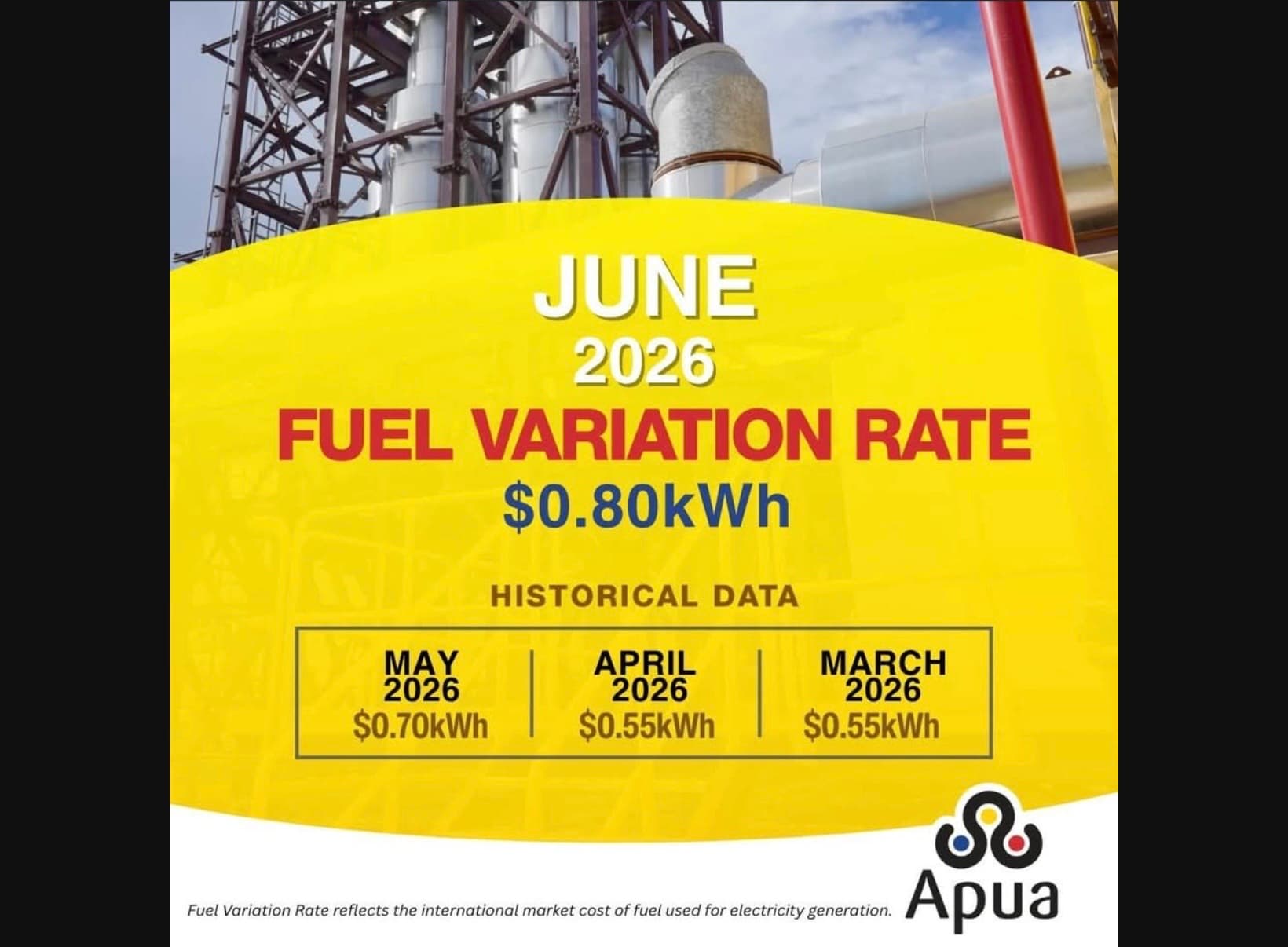
Households and businesses across Antigua and Barbuda will see higher electricity bills this month after the Antigua Public Utilities Authority raised its fuel variation charge to its highest level so far in 2026.
Electricity customers will pay a higher fuel variation charge in June after APUA increased the rate from 70 cents to 80 cents per kilowatt-hour. The new rate represents a 10-cent increase over May and follows rates of 55 cents per kilowatt-hour in both March and April, according to figures released by the utility.
The sharp upward trajectory — from 55 cents in March and April, to 70 cents in May, to 80 cents in June — represents a 45% increase in the fuel charge component of electricity bills in the space of just three months, placing additional pressure on households already grappling with the cost-of-living increases documented in the April 2026 Consumer Price Index report.
What is the Fuel Variation Charge?
APUA said the fuel variation rate reflects the international market cost of fuel used to generate electricity and is influenced by global fuel prices. The fuel variation charge is a component of customers’ electricity bills and fluctuates based on fuel costs associated with power generation.
The charge is a pass-through mechanism that allows APUA to adjust bills in line with the cost of the diesel and heavy fuel oil used to run its generating plants. When global oil prices rise, the charge goes up — and the full impact is borne directly by consumers.