Edition
Real News Antigua & Barbuda

“We Are Not Coping”: Retired Assistant Commissioner Burnette Tells UPP Town Hall That Police Struggling with Current Crime — Let Alone What Deportees May Bring

Editorial Staff
Editorial StaffReal News Editorial Team
6 min read
ShareXFacebookWhatsApp
IMG_2031

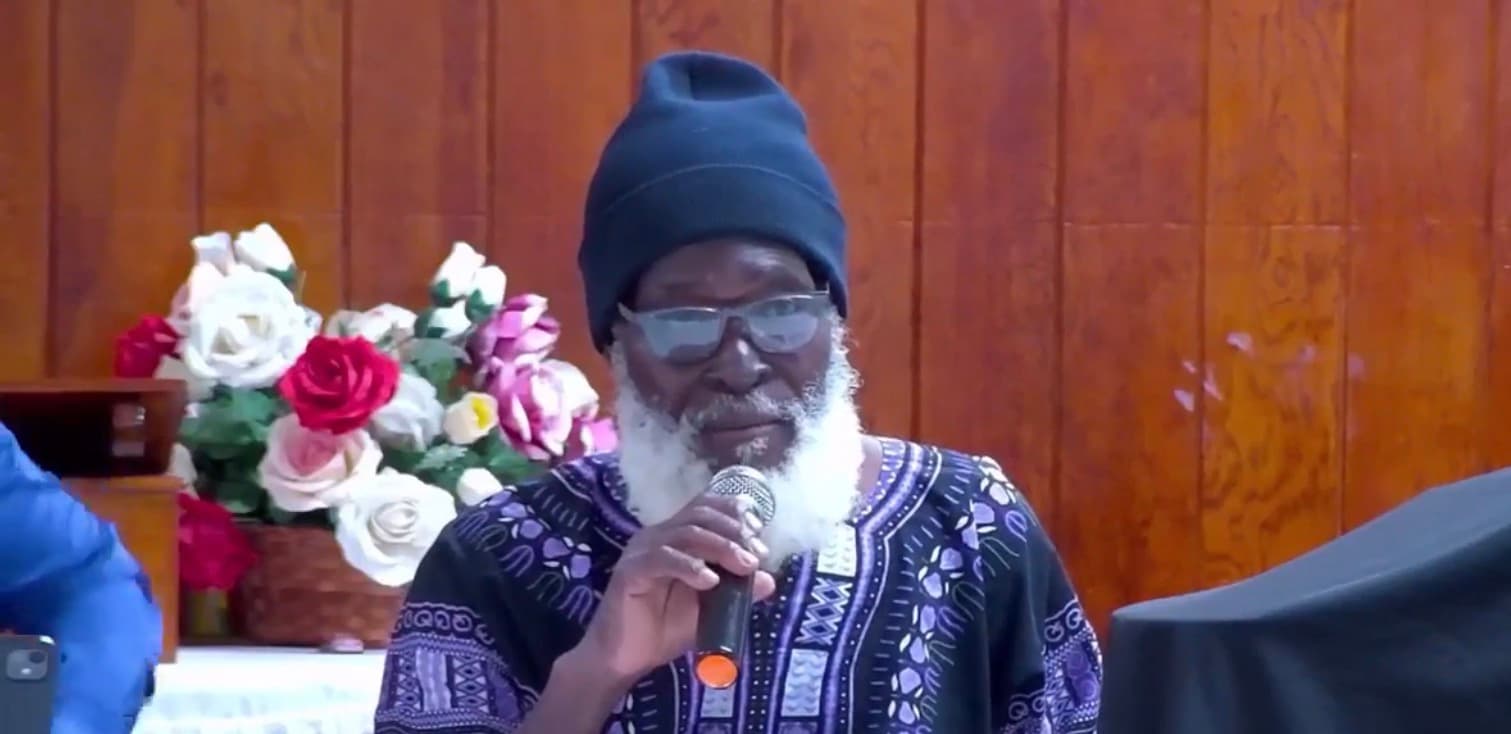
A retired senior police officer has delivered a blunt and devastating assessment of Antigua and Barbuda’s readiness to accept third-country deportees from the United States — telling a packed town hall meeting on Thursday night that the Royal Police Force is already failing to cope with the country’s existing crime challenges, and that layering the complexity of the deportee arrangement on top of that reality is a recipe for disaster.

Retired Assistant Commissioner of Police Nuffield Burnette, who spent his career in law enforcement and is the author of two published books on policing and governance, was invited by the United Progressive Party to address the public safety dimension of the government’s White Paper at the town hall held at the Moravian Conference Centre on Cashew Hill.

“The Most Learned Force in History — and the Worst It Has Ever Been”

Burnette opened with an observation that silenced the room. The Royal Police Force of Antigua and Barbuda, he said, has never had as many educated and degreed officers in its ranks as it does today — and yet, paradoxically, has never performed worse.

“We have not seen as many degreed persons as we would have seen in the past in our Royal Police Force. It is the most learned persons we would have seen, in my view, in the history of the Royal Police Force of Antigua and Barbuda, but yet is the worst the force has been in the history of the Royal Police Force of Antigua and Barbuda, and that is a fact,” Burnette said.

“So it means that something is wrong. Something or things are wrong. Lots of things need to be corrected, and some of it has to do with the powers that be — meaning from government to the police hierarchy and down to the last serving member of the force.”

Antigua Is Not as Safe as You Are Told

Burnette took direct aim at the narrative that Antigua and Barbuda is among the safest countries in the Caribbean — a claim Prime Minister Browne repeated just days ago when he cited the country’s relatively low homicide count and declared, “we’re doing well in the circumstances.”

The retired officer said that narrative is a myth built on a misleading metric. He acknowledged that other Caribbean nations like Turks and Caicos, St. Lucia, St. Kitts, and St. Vincent record more homicides per capita, but argued that in those countries the killings are largely linked to gang-on-gang activity. Antigua and Barbuda’s crime profile, he said, is different — and in many ways more frightening.

“What do you see in Antigua and Barbuda? We see more of what I refer to as domestic crime, which is even more serious than those countries, because our crimes primarily have to do with home invasion, and nothing is more traumatizing than crimes to do with home invasions,” he said.

He reminded the audience of the serial killers who terrorised the island not long ago, breaking into homes and murdering occupants — five people killed in a short space of time, all in the sanctity of their own homes.

“We say from time to time in law enforcement that you do not run away from your house; you run towards your home because your house is your castle. So if it is that home invasions is our prevalent crime, alongside robberies, we have serious problems.”

The Crime Statistics Cannot Be Trusted

In one of his most candid admissions, Burnette told the audience he had deliberately come to the town hall without crime statistics — because the official figures are not reliable.

“The stats are not accurate, and we know that. Persons do not report everything,” he said, citing distrust of how police handle complaints as one reason for underreporting. “I can even speak to situations where I know for a fact that persons try to suppress certain reports so as to make it look as though it’s not that much, it’s not that serious, and that is done for obvious reasons — to appease persons and perhaps to make the government of the day look good.”



Advertisement

Article mid


He said the public knows the true state of crime better than any official report, because they are the ones living it. “You cannot fool the public as it relates to the stats where crime is concerned in this country, because they are the ones who report the matters.”

Police Response: “Tardy” at Best, Absent at Worst

Burnette did not spare his former institution in his assessment of operational readiness. He said police officers frequently fail to respond in a timely manner, sometimes do not respond at all, and are at times “just downright tardy.”

He acknowledged those problems have existed for years but said the situation has worsened.

“Your law enforcement, the capability of your law enforcement will determine the type of life that you live, or how smooth a running you will have,” he said. “When I speak to shortcomings of leadership of law enforcement, I speak to the whole gamut — government, police service commission, all those responsible.”

The White Paper Is “Very Complex” — and the Law Is Not Ready

Turning directly to the White Paper, Burnette said his first reaction upon reading it was alarm at the sheer complexity of what the government was contemplating. He noted that the individuals the United States is seeking to transfer do not fall into a single legal category — they are variously described as asylum seekers, refugees, stateless persons, and other designations.

“The frightening part of it — when you look through our laws, our laws do not make provision to accommodate any of it, and that is the frightening part that really jumped out at me,” he said.

In other words, Antigua and Barbuda’s legal framework has no standalone refugee act, no mechanism for resolving statelessness, and no domestic legislation designed to manage the categories of individuals the White Paper contemplates accepting.

“If We Cannot Cope Normally, What About This?”

Burnette’s closing point brought the threads of his argument together with devastating simplicity. If the police force is already struggling under normal domestic circumstances — unable to respond promptly, unable to present reliable statistics, unable to prevent the home invasions and violent crimes that define the current threat landscape — then what happens when the complexity described in the White Paper is added to that reality?

“If it is that law enforcement are not coping naturally, normally, domestically, so to speak, what about a situation led by the White Paper?” he asked. “We don’t know what may happen, but we can only speak to the worst and expect the best. So we have to, at this juncture, start to brace ourselves.”

The retired Assistant Commissioner’s contribution landed with the authority of someone who spent a career inside the institution being asked to absorb the consequences of the government’s decision — and who knows, from decades of firsthand experience, that the gap between what politicians promise and what police can deliver is the space in which communities suffer.

The UPP has confirmed that Thursday’s town hall was the first in a series of public consultations on the deportee issue. The special parliamentary session on the White Paper is to be held on Tuesday 14th July.

Comments

Leave a comment

Comments are moderated before appearing.

Weekly Digest

Stay ahead of every story that matters.

Every Monday morning — the week's most important news from Antigua & Barbuda and the Caribbean, delivered straight to your inbox.

  • Breaking news & top stories
  • Politics, crime, business & sport
  • Free — unsubscribe any time

No spam. One email per week. Unsubscribe any time.

or
Join our WhatsApp group

About the author

Editorial Staff
Editorial Staff

Real News Editorial Team

Real News Antigua and Barbuda editorial team.

Advertisement

Leaderboard ad

Related articles

Advertisement

M Banner
Join our WhatsApp