Edition
Real News Antigua & Barbuda

"Agriculture is not only on the Backbench; It's Actually Out of the Building" — Emmanuel Peters delivers Scathing Assessment of Antigua and Barbuda's Agricultural Sector

Editorial Staff
Editorial StaffReal News Editorial Team
11 min read
ShareXFacebookWhatsApp
Emanuel Peters VOP

The UPP candidate for St. John's Rural South in the last general election and veteran poultry farmer Emmanuel Peters has delivered a blistering indictment of the state of agriculture in Antigua and Barbuda, declaring the sector effectively abandoned by the Gaston Browne administration and warning that both farmers and farmlands are "disappearing rapidly."

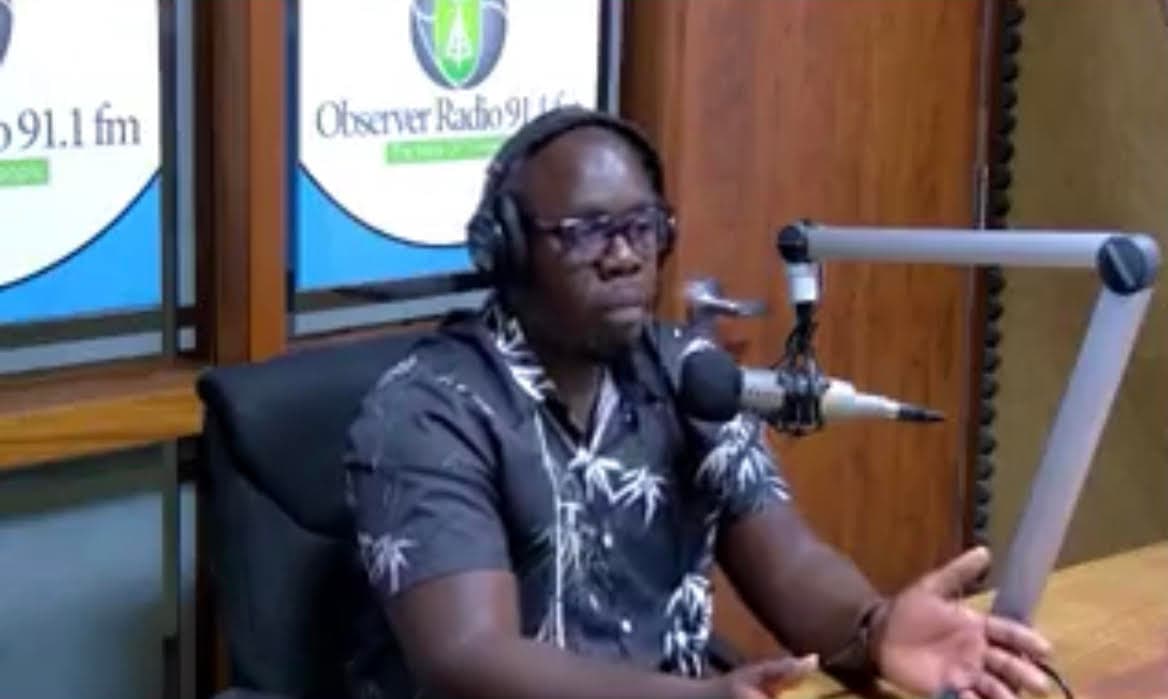
Appearing on Observer Radio's Voice of the People programme with host Adrian Williams on Tuesday, Peters — a farmer of 11 years who comes from several generations of farming stock — painted a picture of an industry starved of planning, financing, water, land security and legal protection, even as the nation's food import bill climbs.

"It is sad to know that where we are right now as a nation, that agriculture is not only on the backbench; it's actually out of the building," Peters said. "It's non-existent right now because of the fact that we look at the budget for the different years, and every year keeps getting smaller and smaller."

No Plan, No Strategy

At the heart of the crisis, Peters argued, is the complete absence of any national agricultural roadmap.

"We have no agricultural plan; we have no agricultural strategies. There is nothing that we're working from that we say in a year time this is what we intend to achieve. In five years' time, this is what we plan to achieve," he said. "They're just going week by week, day by day, and whatever it is, it is. You know, and that's what is crushing our agricultural sector, because we have no protection."

He charged that opportunity in the sector is dispensed through connections rather than merit: "It is more of who you know. It doesn't necessarily mean who most needs or who is most deserving of it gets the opportunity."

Peters cited the government's current fertilizer distribution as a case in point, noting that six or seven containers of fertilizer are presently on island but no training has accompanied them — a recurring failure he says has historically seen more than 40 percent of donated fertilizer wasted or misapplied, with some farmers damaging their crops.

"We're still in this primitive archaic time and mindset of anything goes for agriculture," he lamented. "While everybody else is smart farming and have moved on tremendously, we are still stuck."

Staggering Import Dependence

Peters laid out sobering statistics on the country's dependence on foreign food, revealing that Antigua and Barbuda imports 92 to 93 percent of what it consumes annually.

"I'll give you some stats. We import 44 million EC dollars worth of poultry. We import another 30-something million dollars worth of pork, and overall... we import over $100 million worth of meat," he disclosed.

The revelation is particularly striking against the backdrop of a regional pledge, first announced in 2020, to cut the Caribbean's food import bill by 25 percent within five years. Asked by the host Adrian Williams about the initiative, Peters' response was withering: "It has gone up 25 percent."

He accused the administration of redefining food security to mean importation rather than production. "At present, food security is importing food. Once we have food coming through our shores, food is secured... But then, the local market, the local product, is being killed. It is being destroyed."

The government's approach, he contended, is designed to shield established importers: "The government food security plan is empowering corporate Antigua, allowing them to look if there is a crisis to import more." He recounted a conversation with a government official who told him restricting imports to protect local production would be "political suicide."

Prison at Potworks

On the government's proposal to construct a new correctional facility in the Potworks Dam area — where the prison farm has long operated on roughly 12 acres — Peters gave a qualified answer, endorsing agricultural rehabilitation for inmates but rejecting the site for construction.

"No, because of the fact that it is in a very prime agricultural zone, extending from the Diamonds Estate," he explained. "Once you're going to build a new prison, it is going to take up many acres, so those lands are no longer usable for agriculture."

He suggested the rocky terrain toward the back of Glanvilles, where quarries operate, would be far more suitable for the prison itself, leaving the farm intact on prime soil. "I think that would be more ideal for a prison, and the prison farm remains where it is, and just be properly developed."

He did affirm that agriculture can serve as rehabilitation for young offenders — "I would say yes, but it is not for everybody" — and noted that the prison, which once fed itself from its own farm, now purchases the overwhelming majority of its food. "Antigua's prison right now, they actually purchase 80, 90 percent of what they use to cook in the prison, and before it wasn't like that."

The problem, he said, comes down to neglect of basics: "Sometimes it's just simple; they don't have vehicles to take the prisoners from the prison to the farm."

Water: The First and Greatest Hurdle

Peters identified water as the foundational challenge confronting every farmer, breaking down the arithmetic in stark terms.

"A farmer that is planting one acre of land needs 5,000 gallons of water per day... multiply that by a week. That's 35,000 gallons," he said, likening the daily requirement to six and a half 800-gallon tanks. "So I'm just bringing reality to you to let you know how far off we are from being productive."

He also dismissed as fiction the widely repeated claim that farmers enjoy concessionary water rates. When Williams raised the subject, Peters shot back: "Please let me know who... That's news to me."

He recounted that a Cabinet decision to grant established farmers relief on water — and in some cases electricity — was communicated to APUA years ago but never implemented. When he pressed the utility, he said, an official warned him off: "He just said to me that hey, it's better off you don't say anything because then you are a private business, your commercial business, and if we charge a commercial rate which is higher than the normal rate, then you may be in for even more trouble."

Three years after raising the matter with the ministry, he said, the result has been "nothing, nothing."

Even alternatives like well-digging are financially prohibitive, at roughly $250 per foot with no guarantee of striking water. "You're just digging, hoping that based upon the science or based upon the history that you will find water... Are you willing to take that risk?"

Praedial Larceny: "The Law is Archaic"

Peters reserved some of his strongest criticism for the country's outdated praedial larceny legislation, which he said effectively shields thieves who are caught red-handed on farms.



Advertisement

Article mid


"One of the main problems with the praedial larceny is the act on the books. It's archaic. It is not functional in today's time," he said. "You physically see them, and you can't do anything much about it. If you come on my farm... you pick up my resources on my farm until you walk through what is considered a gate... and leave the premises. Only then the police can arrest you."

He noted that St. Kitts and Nevis and other Caribbean territories have long since modernised their laws and shared a first-hand courtroom experience that left him stunned: "I've been in court, and I've heard thieves tell the magistrate that... he gave me the three goats. How do you prove that?... And the person got away."

Adding insult to injury, he said, even a conviction leaves the farmer uncompensated: "We are still down $25,000 that the person stole. Who is going to replace that?"

Peters revealed that his own organisation, the National Livestock Association, rewrote the praedial larceny act at the government's request — producing a document of more than 30 pages — and submitted it during Dean Jonas' tenure as agriculture minister. "Where was it today?" he asked.

Farmers Exiting the Industry

The cumulative weight of these burdens, Peters said, is driving an exodus from the sector, with the country losing "in excess of 12 to 13 farmers yearly at this present time."

Insurance is unavailable — "they say it's too high risk" — and supermarkets, following the lead of the state-owned Central Marketing Corporation, pay farmers only for what is sold, leaving producers to absorb spoilage losses regardless of the condition in which goods were delivered.

"You want to know if you're having a bad day, go seek out a farmer and have a conversation," Peters said. "If you think you're having a bad day, just sit and have a conversation with a farmer. Hear his woes. You will feel like getting up and running."

Asked where farmers can turn, his frustration boiled over:

"Where do we go?

Who's standing with us?

Who do you lean on?

Who do you talk to?

Where are we going to get results?"

Cruise Ships, China Trips and a $6 Million Stage

Peters punctured another popular assumption — that cruise ships provision locally. "The cruise ship, they do not stock here in Antigua. They only offload their waste here," he said, recalling that local farmers have secured cruise business only twice, when an emergency diverted vessels from their usual Barbados provisioning. Attempts to formalise a relationship were met with demands for GAP certification and "a million US dollars," he said. "They make it into such a thick situation that you cannot pass through it easily."

He also took aim at the composition of the annual agricultural delegations to China, alleging the trips have been captured by patronage: "The majority of the people that go aren't farmers... The majority of the people that go are politician's drivers, their cousin, their auntie, their friend."

And he questioned the government's spending priorities outright: "It tears into my flesh when I read that we purchase a carnival stage for almost $6 million that is going to be used once a year. I cringe... You know what $6 million can do in the agricultural sector right now?"

Even the Prime Minister's much-touted personal farm did not escape scrutiny. "As braggingly as the prime minister speaks about his farm, if you pass it, the only thing that is growing up there are coconut trees," Peters remarked.

He further predicted that the agricultural headquarters east of Cook's landfill area would soon be repurposed entirely: "I can almost guarantee you next year that is going to be a site for a mas camp. When you see it, call me."

The cancellation of this year's Piango Fest — because there were no mangoes — stood, for Peters, as a symbol of the decay: "This is the ministry that develops this program... and they killed it. It is dead now."

A Minister-in-Waiting's First Moves

Pressed by Williams on what he would do if handed the agriculture portfolio, Peters was ready with an answer.

"First priority is to develop agricultural policy, one that protects farmlands and protects farmers," he said, proposing that agricultural lands be constitutionally enshrined such that "no matter who comes afterwards, you will not be able to sell those agricultural lands unless you get one-third of the population decision."

His second priority would be agro-processing — turning sweet potato and cassava into flour, chips and bread, extending shelf life through pickling, smoking and drying, and building the storage and preservation infrastructure the country currently lacks. He noted that a sweet potato bread machine imported eight or nine years ago has never been put into operation.

Peters also endorsed embedding agriculture in the school system, sharing that his own farm operates an open-gate policy for schools and that attitudes shift dramatically with exposure. On one visit from a prominent private school, he asked at the outset who wanted to be a farmer — and no hands went up. "By the end of the tour... you had about 15 students who now had an interest and wanted to be farmers," he said. "We have been taught not to be farmers but entrepreneurs and businessmen and women, and that's where the problem lies... Farmers are entrepreneurs."

Pointing to St. Kitts' fully developed artificial insemination programme for livestock and Guyana's aggressive production expansion, Peters insisted the region has proven the model works — Antigua and Barbuda simply refuses to follow it.

"It is not lack of technical support. It is not lack of knowing. It is not lack of seeing. It is not lack of understanding," he said of the government's posture. "So, it is a very, very sad state that we're at right now."

His closing warning was blunt: unless change comes quickly, there may be little left to save. "By the time we do get there, and we get that opportunity, God's willing, there may not be anything left for us to actually develop or change because agriculture is rapidly declining in every sense."

Comments

Leave a comment

Comments are moderated before appearing.

Weekly Digest

Stay ahead of every story that matters.

Every Monday morning — the week's most important news from Antigua & Barbuda and the Caribbean, delivered straight to your inbox.

  • Breaking news & top stories
  • Politics, crime, business & sport
  • Free — unsubscribe any time

No spam. One email per week. Unsubscribe any time.

or
Join our WhatsApp group

About the author

Editorial Staff
Editorial Staff

Real News Editorial Team

Real News Antigua and Barbuda editorial team.

Advertisement

Leaderboard ad

Related articles

Advertisement

M Banner
Join our WhatsApp