Edition
Real News Antigua & Barbuda

Senator Jonathan Wehner Dismantles Government's "Trust the Negotiators" Defense in Senate TCN Deportee Debate

Editorial Staff
Editorial StaffReal News Editorial Team
8 min read
ShareXFacebookWhatsApp
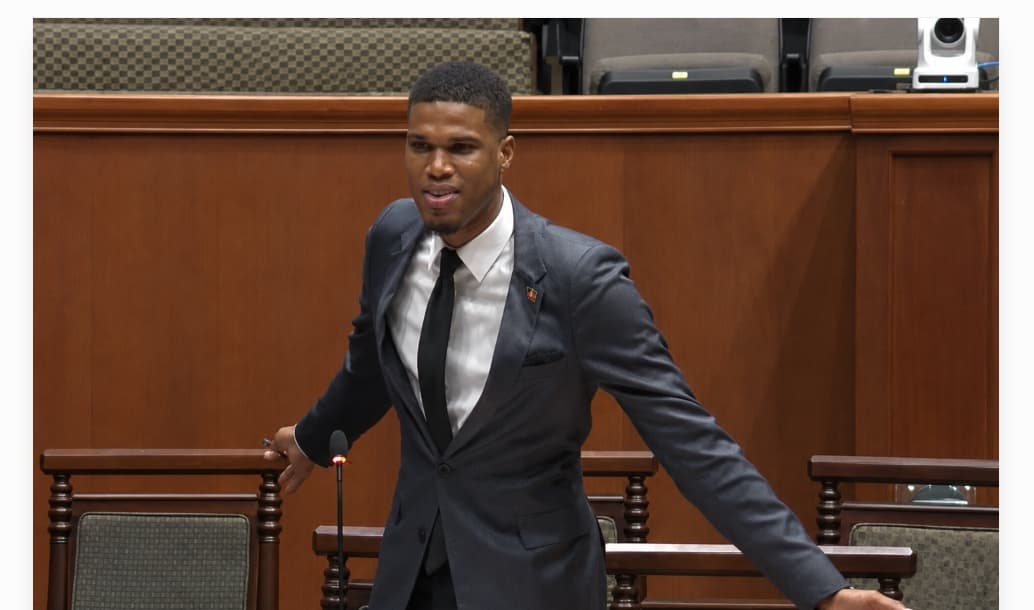
jonathan wehner arms outstretched speaking in parliament

Opposition Senator Jonathan Wehner used his contribution to the senate debate on the third-country deportee resolution to systematically dismantle the government's central argument — that the nation should simply trust the Gaston Browne administration to negotiate with the United States — telling the chamber that the government's own recent performance in foreign policy negotiations gives the public "no reason to trust them."

Speaking during the sitting of Thursday, July 23rd, which stretched late into the night, Senator Wehner said government senators had spent the debate "singing the chorus of trust the negotiator" — a chorus that he argued collapses under the weight of the administration's own performance.

"They set their Own Bar and Failed Horribly to Meet It"

The senator reminded the House of the Prime Minister's now-viral ABS interview in which PM Gaston Browne assured the nation that he and his administration were "too skilled and too competent" for any United States visa restrictions to be imposed on Antiguans and Barbudans.

"Days after the Prime Minister made that declaration of skilfulness and competency, exactly what he told us to rest assured would not happen, happened — and in the most extreme measure," Senator Wehner said, noting that within the CARICOM region, Antigua and Barbuda received among the harshest restrictions on the US list. Ten-year multiple-entry visas, he pointed out, have been reduced to three-month single-entry — a downgrade shared only with the Commonwealth of Dominica among Caribbean Community states. "We tied for first place for the worst visa restrictions," he said.

"I'm making the point that we have no reason to trust them in the negotiations based upon their most recent performance as it relates to foreign policy negotiations — a total, abject failure, unequivocally," the senator declared. "They can't reject that, because they set their own bar and they failed horribly to meet that bar."

A White Paper with the Wrong Date and Contradictory Numbers

Turning to the white paper attached to the resolution, Senator Wehner catalogued what he described as basic inconsistencies unbecoming of a "most skilled and most competent" negotiating team.

The white paper, he noted, was released by the Office of the Prime Minister and government media outlets on July 2nd — yet the document itself is dated July 9th, 2026. "They couldn't even get the date right," he said. "If you are the most competent, you will be able to at least get the date you're releasing a white paper correct. That's just common sense to me."

More substantively, the senator highlighted that the white paper states the government would accept no more than ten deportees — yet, after its release, the Prime Minister and the Director General of Communications publicly announced the country would accept up to 14 to 16 individuals annually, a shift reported across virtually every media outlet. Real News previously reported that this figure represents a 40 to 60 percent increase over the cap of ten the Prime Minister described as "non-negotiable" at the OECS Authority summit in Deep Bay in June.

"That is not consistent with what is in the white paper that we have here today," Senator Wehner said. "What are we working with? Where is the consistency? Where is the skillfulness and the competency in the negotiation?"

Seven Months of Secrecy and an Unsigned MOU

Senator Wehner pressed hard on the government's handling of the Memorandum of Understanding, which — as the white paper itself confirms — was signed with the United States on December 19th, 2025, but kept from parliament and the public for seven months, surfacing only on the eve of the lower house debate.

"Seven months you had to release the MOU, and you didn't do it once," he charged. "You wait until the eve of a debate in the lower house to release the documents to the members and say, 'Oh, we are transparent and we are accountable'. "

Worse, he said, the copy provided to parliamentarians is unsigned — echoing the revelation made by Barbuda MP Trevor Walker in the House of Representatives, who asked pointedly, "Where is the one that was signed?"

"How are we supposed to know if the unsigned MOU copy that we have is the same that was signed by the representative from the United States of America and the representative from the government of Antigua and Barbuda? We have no clue," Senator Wehner said, addressing the Senate President directly: "You are an attorney-at-law. You know the difference. How can you do any kind of legal transaction, any kind of negotiation, any kind of legal process without signed documents? That's a non-starter."

He also questioned the white paper's claim, at page seven, that the government received "a series" of draft operating procedures from the United States. Only one such document was provided to senators — dated May of this year — leaving the chamber with no way of knowing whether it reflects Washington's current position. "We are here in this honourable house debating a document that we don't even know if it reflects the current position of one of the two parties involved in these negotiations. You see how damning that is," he said.

"It was the Secretary of State who said it — Not Us"


Advertisement

Article mid


Senator Wehner rejected any suggestion that the opposition had engaged in fearmongering about the character and background of the individuals who would be sent to Antigua and Barbuda, reminding the chamber that the description was given by Washington itself.

"It is not us. It was Marco Rubio the Secretary of State of the United States of America who, from the onset — April 30th, 2025, during a cabinet briefing within the United States — told the world that America's policy is to deport the most despicable human beings, perverts, pedophiles and child rapists to countries willing to do a favour for the government," he said, referencing Marco Rubio's widely circulated remarks.

In the absence of a published MOU, draft operating procedures, or counterproposal, the senator argued, the public had no way of testing the government's assurances against the Secretary of State's declared policy. "We were discussing this in the dark, and you wonder why the absence of information would logically produce people who worry."

He noted that when a public consultation was held — by the opposition, not the government — "the prevailing opinion was we have no clue what is going on with these negotiations." The government, he charged, "didn't consult one time with the people of Antigua and Barbuda" on a matter affecting public safety, public health, national security, housing and the labour market.

Gaps in Criminal and Medical Records

Senator Wehner drew the chamber's attention to a provision in the white paper stating that the United States will supply the deportees' criminal and medical records only "to the extent known or available" to the US.

"That is extremely important when you're talking about third-country nationals," he warned. "If you're only getting information known or available to the United States of America — and not including the country of origin or birth of these TCN deportees — I don't think I need to explain any more the potential gaps in information regarding the criminal and medical records. These are gaps we need filled, and none of them can give any answer to those kinds of questions."

"CARICOM has Failed Us"

Widening his critique beyond Antigua and Barbuda, Senator Wehner accused the Caribbean Community heads of government of failing the region by negotiating bilaterally with Washington instead of forging a single coordinated position.

"It is for moments like these CARICOM was established. Pooled sovereignty is not sovereignty lost — it is sovereignty gained," he said. "Why is it that CARICOM heads of government could not meet and come to a single coordinated approach? If you accept, you accept and negotiate the terms of our acceptance as a Caribbean community. If you reject, you reject and accept the consequences of our rejection as a Caribbean community. But we failed our people by bilaterally going and negotiating with the United States of America."

Constitutional Questions that Need Answers

Closing his contribution, the senator turned to the constitution of Antigua and Barbuda, warning that government assurances of "no constitutional violations" ring hollow from a team whose previous assurances on visa restrictions proved worthless.

He cited chapter two, section three, which guarantees the protection of fundamental rights and freedoms "of the individual — not of the citizen," meaning any deportee placed on Antiguan and Barbudan soil would enjoy constitutional protections, including the freedom of movement.

"You can't say they come here and they're going to solely reside in one part of the country. They have the right to move freely because they are individuals within Antigua and Barbuda," he said, noting the constitution also guarantees the right to enter and leave the country and immunity from expulsion — a provision that raises the specter (troubling thought) of deportees who, once accepted, can never lawfully be removed.

He further questioned whether these individuals would gain legal status to benefit from freedom of movement within the OECS and the more limited free movement regime within CARICOM — "questions that need answers."

"It is not fearmongering," Senator Wehner concluded. "We are here to do our duty. I have a burden of responsibility to serve the people of Antigua and Barbuda. I will never accept that because I don't agree wholeheartedly with the song and chorus given to them to sing, I am being unpatriotic. I love my country. So, I come to ask the questions."

The resolution, which passed the House of Representatives earlier this month despite similar objections from the opposition benches, authorises the government to continue negotiations with the United States on the acceptance of third-country nationals.

Comments

Leave a comment

Comments are moderated before appearing.

Weekly Digest

Stay ahead of every story that matters.

Every Monday morning — the week's most important news from Antigua & Barbuda and the Caribbean, delivered straight to your inbox.

  • Breaking news & top stories
  • Politics, crime, business & sport
  • Free — unsubscribe any time

No spam. One email per week. Unsubscribe any time.

or
Join our WhatsApp group

About the author

Editorial Staff
Editorial Staff

Real News Editorial Team

Real News Antigua and Barbuda editorial team.

Advertisement

Leaderboard ad

Related articles

Advertisement

M Banner
Join our WhatsApp