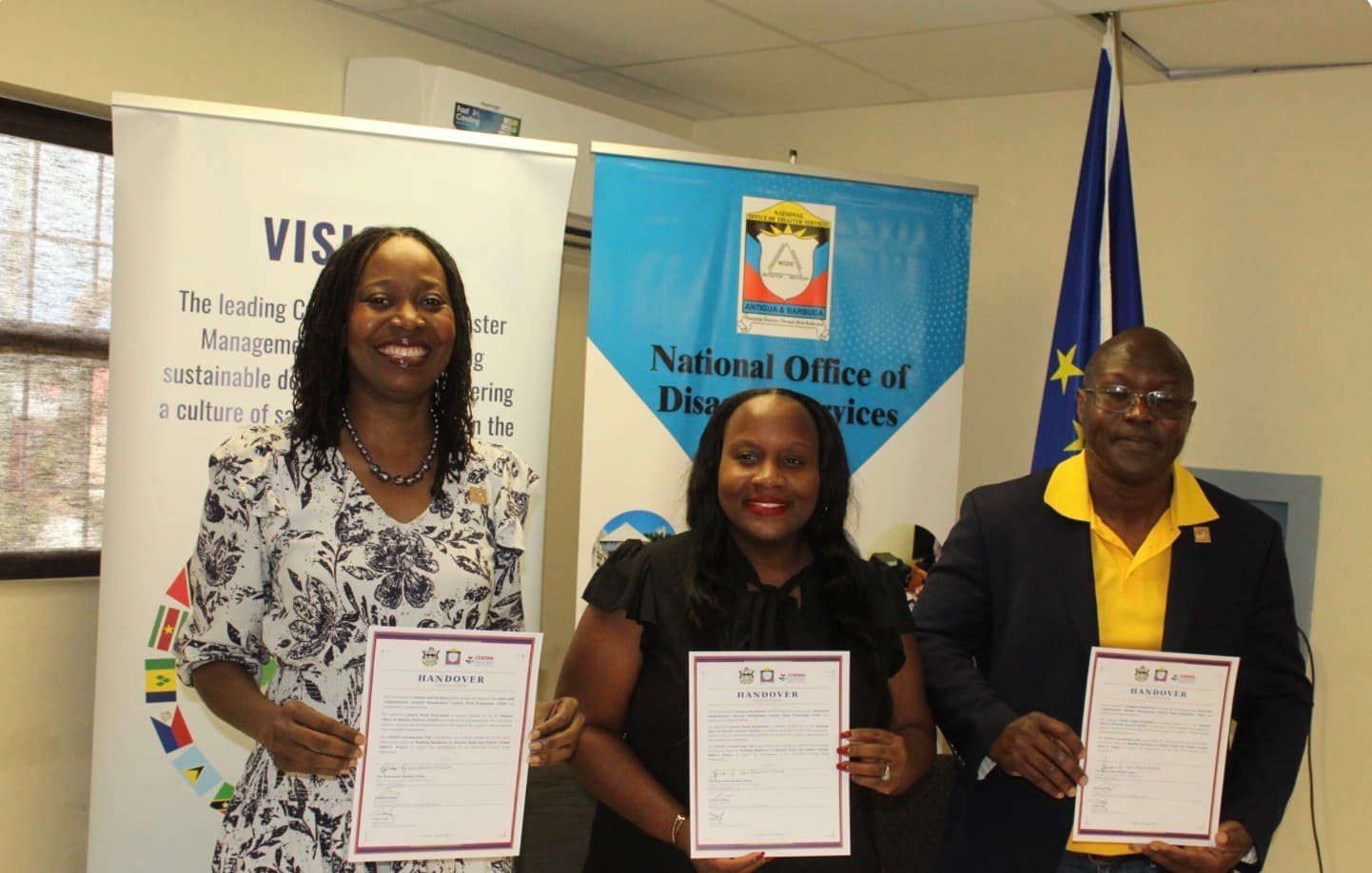
Antigua and Barbuda has formalised its disaster management strategy for the next five years, signing a Country Work Programme that the Caribbean’s leading disaster agency has described as a visionary framework for protecting the lives, livelihoods, and infrastructure of the twin-island nation from an increasingly dangerous risk landscape.
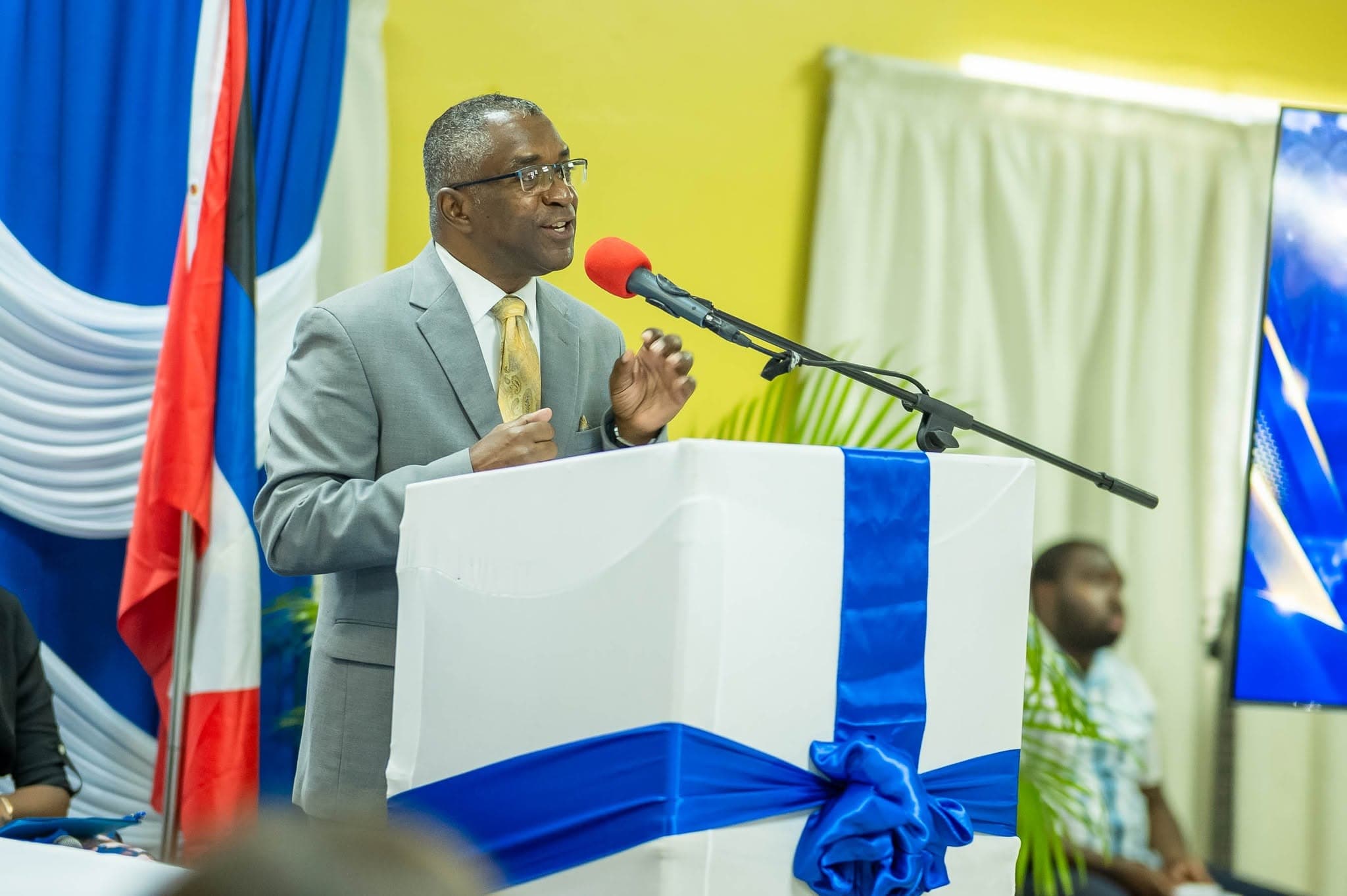
Caribbean Disaster Emergency Management Agency Executive Director Elizabeth Riley made the remarks at the signing of the country’s Country Work Programme, attended by senior government officials and regional partners. Riley described the programme as far more than an operational plan, calling it the national strategic framework for advancing comprehensive disaster management across every sector of society.
“It reflects a clear national vision and commitment to protecting lives, livelihoods, infrastructure and development gains from the impacts of natural and man-induced hazards,” she said.
A Risk Landscape That Keeps Evolving
Riley warned that the risk landscape facing Caribbean nations continued to evolve, pointing to recent hurricanes, earthquakes, sargassum proliferation, and oil spills as reminders that climate change demanded a proactive and coordinated approach. She said building resilience in such an environment required more than short-term measures — it called for strategic, medium to long-term planning, informed decision-making, and the collective effort of government, communities, the private sector, civil society, academia, and development partners.
A Whole-of-Government Approach
The CDEMA head said she was particularly pleased that the programme had been developed through a whole-of-government approach, helping to ensure national ownership and positioning disaster risk management as a shared responsibility. She noted that the framework aligns the country’s priorities with the Regional Comprehensive Disaster Management Strategy 2014 to 2030 and the Sendai Framework for Disaster Risk Reduction 2015 to 2030, strengthening the link between national action and wider regional and global goals.
The programme was developed with funding provided by CDEMA under the Building Resilience of CARIFORUM States project, with support from the European Union. Riley extended appreciation to the European Union for its continued partnership and confirmed she had raised the programme with Cabinet, securing assurances of full support for its implementation.
A Nation That Has Sheltered Its Neighbours