Edition
Real News Antigua & Barbuda
Breaking
PM Browne claims Antigua & Barbuda is being "coerced" to accept third-country deportees from the US/With two increases in the fuel variation charge since the April election PM Browne hints at INCREASING both the water rates and fuel prices/PM Browne claims Antigua & Barbuda is being "coerced" to accept third-country deportees from the US/With two increases in the fuel variation charge since the April election PM Browne hints at INCREASING both the water rates and fuel prices/

No Proposals or Agreement Brought Before Parliament as PM Browne Says Antigua & Barbuda Being "Coerced" Over Acceptance of Third-Country Deportees from the US

Editorial Staff
Editorial StaffReal News Editorial Team
7 min read
ShareXFacebookWhatsApp
third country deportees


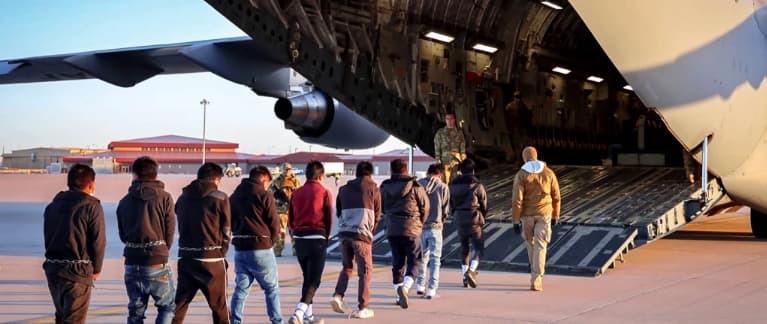
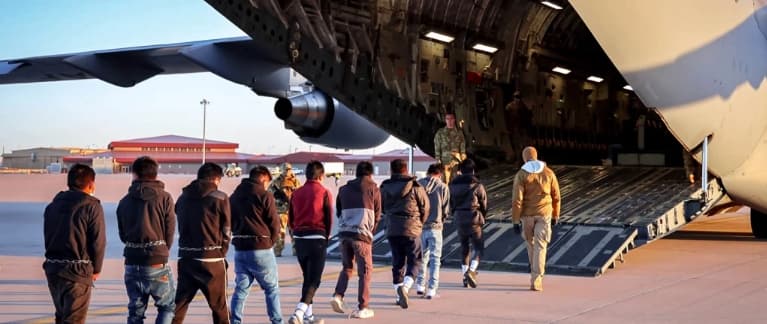
Prime Minister Gaston Browne claims he has drawn a firm line in the sand with the United States over the controversial third-country deportee plan, revealing that his government has rejected a proposal to accept 120 individuals annually and counter-offered a strict cap of just ten per year — while warning that the Caribbean is being "coerced" into compliance by Washington through threats to visas, economic assistance, and the region's Citizenship by Investment programmes.

But as the Prime Minister speaks publicly about the pressure being applied by the United States, a critical question is being raised by observers and commentators across the country: why has none of this been brought before Parliament? Antiguans and Barbudans are learning the details of their government's negotiations with the most powerful nation on earth not through parliamentary debate, but through a speech delivered at a regional summit and utterances on the PM's radio station.

"We Have Been Coerced"

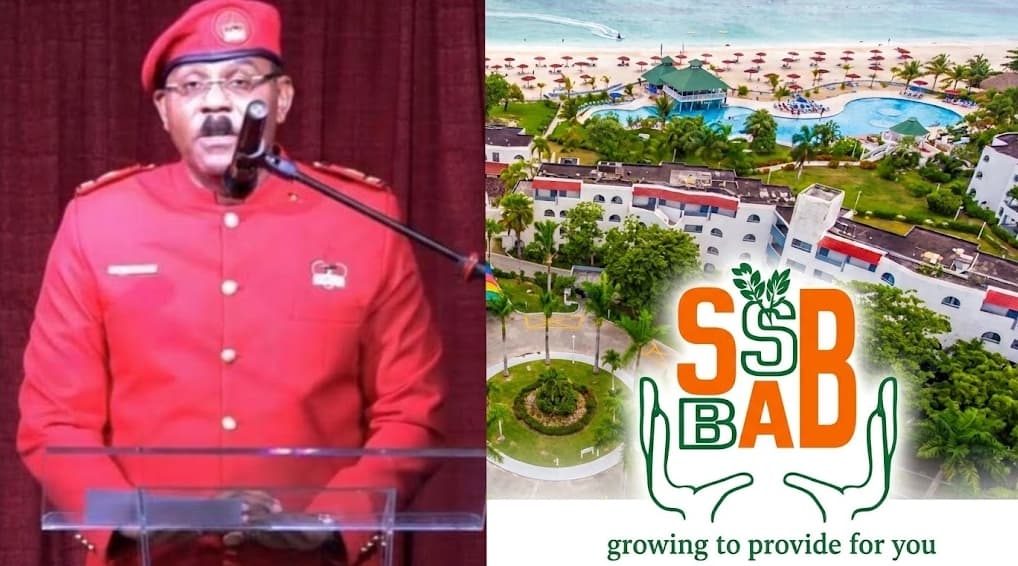
Speaking during his first address as incoming Chairman of the Organisation of Eastern Caribbean States Authority at the Royalton Resort in Deep Bay, Browne made the unusual disclosure that Antigua and Barbuda has been facing direct pressure from the United States to accept deportees who are not citizens of the twin-island nation.

"We have been coerced to take these deportees," Browne told the assembled heads of government. "Encouraged by the great United States. And if we don't cooperate, they punish us."

The prime minister was unambiguous about the leverage Washington is wielding. "As the Prime Minister of Antigua and Barbuda, I cannot willingly cooperate with any other power, any country, to destroy our beautiful twin-island state," he said, adding that his government has insisted it would not accept any criminal elements among those sent to the country.

120 Rejected; 10 Counter Proposed

Browne disclosed that Antigua and Barbuda was asked to consider accepting 120 individuals annually — a figure he described as "totally unacceptable." His administration has submitted a counterproposal capping arrivals at ten per year. "We have sent them a counterproposal. We said that we'll accept 10 annually, no more than 10," Browne said. "I hope that this will not result in any acrimony and further restrictions, but that they will respect our position and respect our sovereign right to determine how many of those individuals we accept."

A Glaring Absence of Parliamentary Scrutiny

While the Prime Minister has chosen to disclose elements of the negotiations at a regional summit, what he has conspicuously not done is bring any of those proposals — or any agreement reached — before the Parliament of Antigua and Barbuda. The nation's elected legislators have not been given the opportunity to debate the US proposals, scrutinise any counteroffers made in the name of the Antiguan and Barbudan people, or examine the terms of any arrangement that may have been agreed between the two governments.

This absence of parliamentary transparency stands in pointed contrast to the approach taken by Jamaica. When Jamaica reached its agreement with the United States — under which it agreed to accept up to 25 refugees every two weeks and to serve as a transiting point for deportees bound for other locations — the Jamaican government brought that Memorandum of Understanding before its parliament. Jamaican legislators were given the opportunity to see, debate, and scrutinise what their government had agreed to with Washington.

Antigua and Barbuda's Parliament has been given no such opportunity. The country is being asked to trust that the Prime Minister's counterproposal — a cap of ten individuals per year — represents the full and complete picture of what is being negotiated, without any of the formal, accountable, parliamentary scrutiny that a matter of this magnitude demands.

This is not a minor administrative arrangement. It is a negotiation with the United States government over who enters Antigua and Barbuda, under what conditions, and with implications for public safety, national security, sovereignty, and the relationship between the two nations. It is precisely the kind of matter that Parliament exists to oversee.

Advertisement

Article mid

The Stick Behind the Request

The consequences of non-compliance are not abstract. The leverage available to Washington is real and immediate: refusal risks the suspension of US visas for Caribbean nationals, withdrawal of economic assistance, and further pressure on the region's already strained Citizenship by Investment Programmes (CIP) — one of the most important sources of development revenue for several OECS member states, including Antigua and Barbuda.

The Regional Divide

The issue has exposed a growing fault line within the Caribbean. While Antigua and Barbuda, according to the PM, is holding out and negotiating firm limits, Jamaica has already moved in a different direction, signing an MOU to accept up to 25 refugees bi-weekly and acting as a regional transiting hub. That divergence has drawn sharp criticism from regional observers, who argue that Caribbean countries negotiating separately with Washington are systematically weakening their collective bargaining position. Dealing with the US on an individual basis makes each nation more vulnerable to American pressure — a fragmentation of regional leverage at the very moment it is most needed.

The OECS Forms an Advisory Team

The OECS Authority agreed to establish a broad-based, high-level advisory team drawn from across member states to carry out technical discussions and guide negotiations with the United States, both individually and collectively.

Outgoing OECS Chairman and St Vincent and the Grenadines Prime Minister Godwin Friday, who formally handed the chairmanship to PM Browne at the summit, said the request from the United States has emerged amid "a period of profound geopolitical uncertainty, arguably the most consequential our region has faced in a generation," with implications for regional security, energy supply, cost of living, migration flows, and diplomatic relations. "We are still working through this matter very carefully because it holds serious implications for our economy, the safety of our people, the utilization of scarce resources and for our sovereignty," Friday said.

Antigua & Barbuda's Red Lines

Even as he maintained his firm stance on the deportee cap, Browne was careful to affirm Antigua and Barbuda's broader commitment to the US relationship. "We acknowledge the sovereign right of all states to determine their border security policies," he said. "We ask only that such rights be exercised with due regard for a historically close and mutually beneficial relationship."

He raised concerns about the impact of travel restrictions on Caribbean nationals with ties in the United States. "Our largest diaspora is in the United States. We need to ensure that the diaspora here in the Caribbean and certainly our people in the United States can move freely," he said. He also pointed to the economic interdependence between the two sides. "Our people purchase American goods, use American financial services, and send their children to American universities. We are beneficial partners for the American economy, not adversaries to be restricted."

A Sovereignty Test with No Parliamentary Voice

The third-country deportee issue is shaping up as one of the most consequential sovereignty tests small Caribbean states have faced in years. But for Antigua and Barbuda, the concern is not only what Washington is asking — it is how the response is being managed. Decisions of this nature, affecting the safety, sovereignty, and social fabric of the nation, should not be negotiated in the shadows of regional summits and disclosed piecemeal to the public through casual remarks on radio. They should be brought to the floor of Parliament, where elected representatives can ask the hard questions on behalf of the people who sent them there.

Jamaica understood this. The question is whether Antigua and Barbuda's Parliament will demand the same transparency — or whether the nation's elected legislators will continue to be the last to know what is being agreed in their name.


Comments

Leave a comment

Comments are moderated before appearing.

Weekly Digest

Stay ahead of every story that matters.

Every Monday morning — the week's most important news from Antigua & Barbuda and the Caribbean, delivered straight to your inbox.

  • Breaking news & top stories
  • Politics, crime, business & sport
  • Free — unsubscribe any time

No spam. One email per week. Unsubscribe any time.

About the author

Editorial Staff
Editorial Staff

Real News Editorial Team

Real News Antigua and Barbuda editorial team.

Advertisement

Leaderboard ad

Related articles

Join our WhatsApp