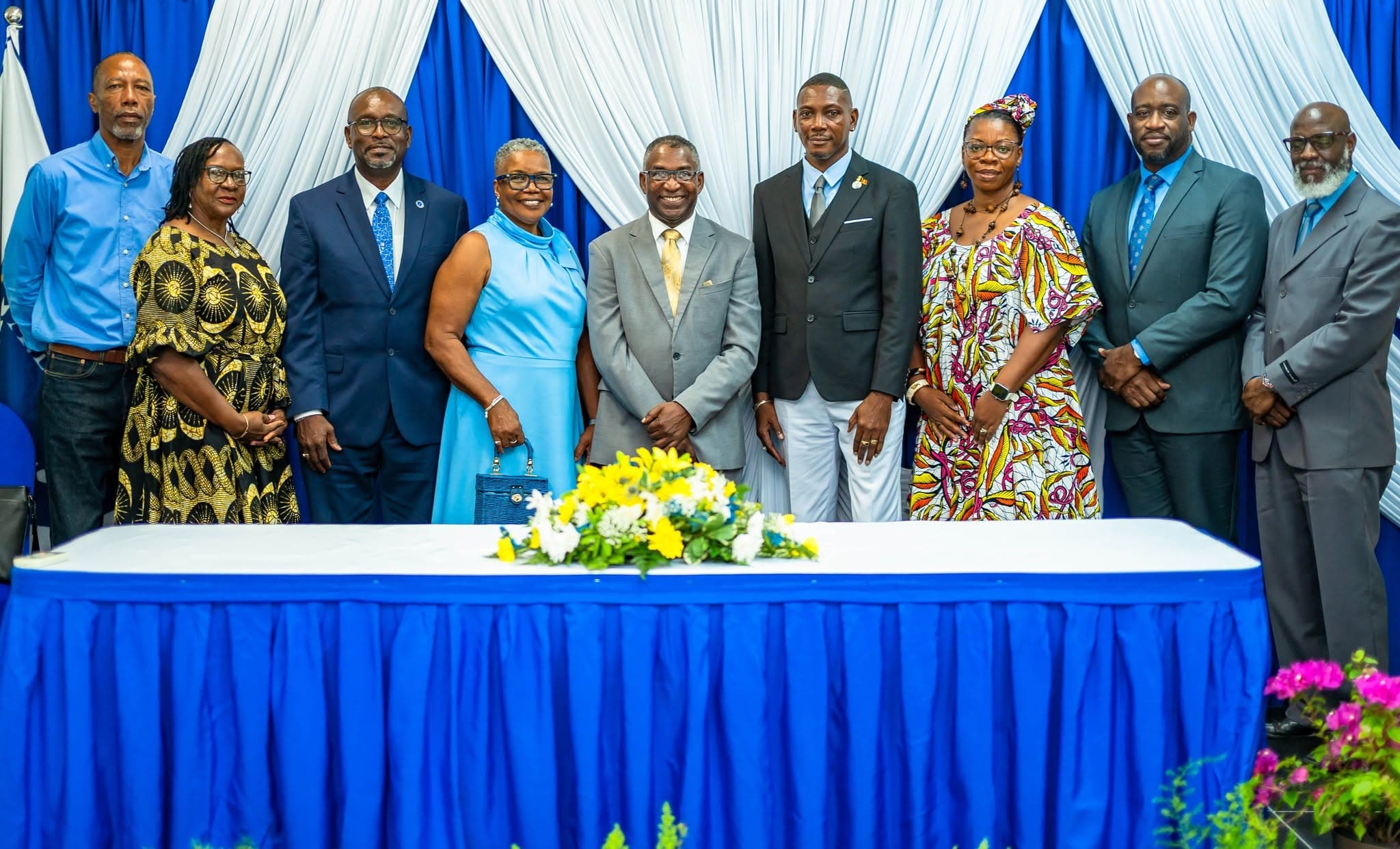
Prominent Jamaican trade unionist Senator Kavan A. Gayle, C.D., has challenged the Antigua and Barbuda Workers Union (ABWU) to craft a "Workers' Charter for the Future of Work" and take it to government, opposition, employers and educational institutions — and to demand that each of them answer with a vision of their own.
Senator Gayle, who has served as President-General of the Bustamante Industrial Trade Union (BITU), Jamaica's largest trade union, since November 2007, and also sits as a Government Senator in the Jamaican Parliament, delivered the feature address at the opening ceremony of the ABWU's 59th Annual Delegates Conference on Sunday. In addition to having more than three decades of experience in the trade union movement, he currently serves as a regional executive member of Union Network International and on the world executive of the International Transport Workers' Federation. abwunionabwunion
The charter he proposed, Senator Gayle said, should be "not simply a list of grievances, not simply a list of wage demands," but a vision encompassing decent work, living wages, social protection, lifelong learning, digitalisation and climate resilience. He also proposed that the Caribbean develop a regional social dialogue protocol for the future of work, insisting that trade unions be present when governments court investors — not merely summoned when problems arise.
Senator Gayle used much of his address to remind delegates of the ABWU's legislative legacy, crediting the union with a 1972 resolution that led to social security legislation — the first of its kind in the OECS — as well as the 40-hour work week and the Labour Code provision giving priority to severance owed to workers when companies fail. "When a company is failing, the investors get priority," he said. "But the workers who put in the blood, sweat and tears came down the totem pole. This union in Antigua changed that."
"Workers' rights did not simply appear because of the benevolence of an employer," he told delegates, warning that workers become an afterthought while governments amend laws and revise tax regimes to attract investors, then stall on workers' issues with refrains like "we are still consulting" and committees "that never meet." He threw his support behind a 2026 amendment to the Labour Code that accounts for fixed-term and temporary work, outsourcing, remote work, digital surveillance, artificial intelligence, data protection and workplace harassment.