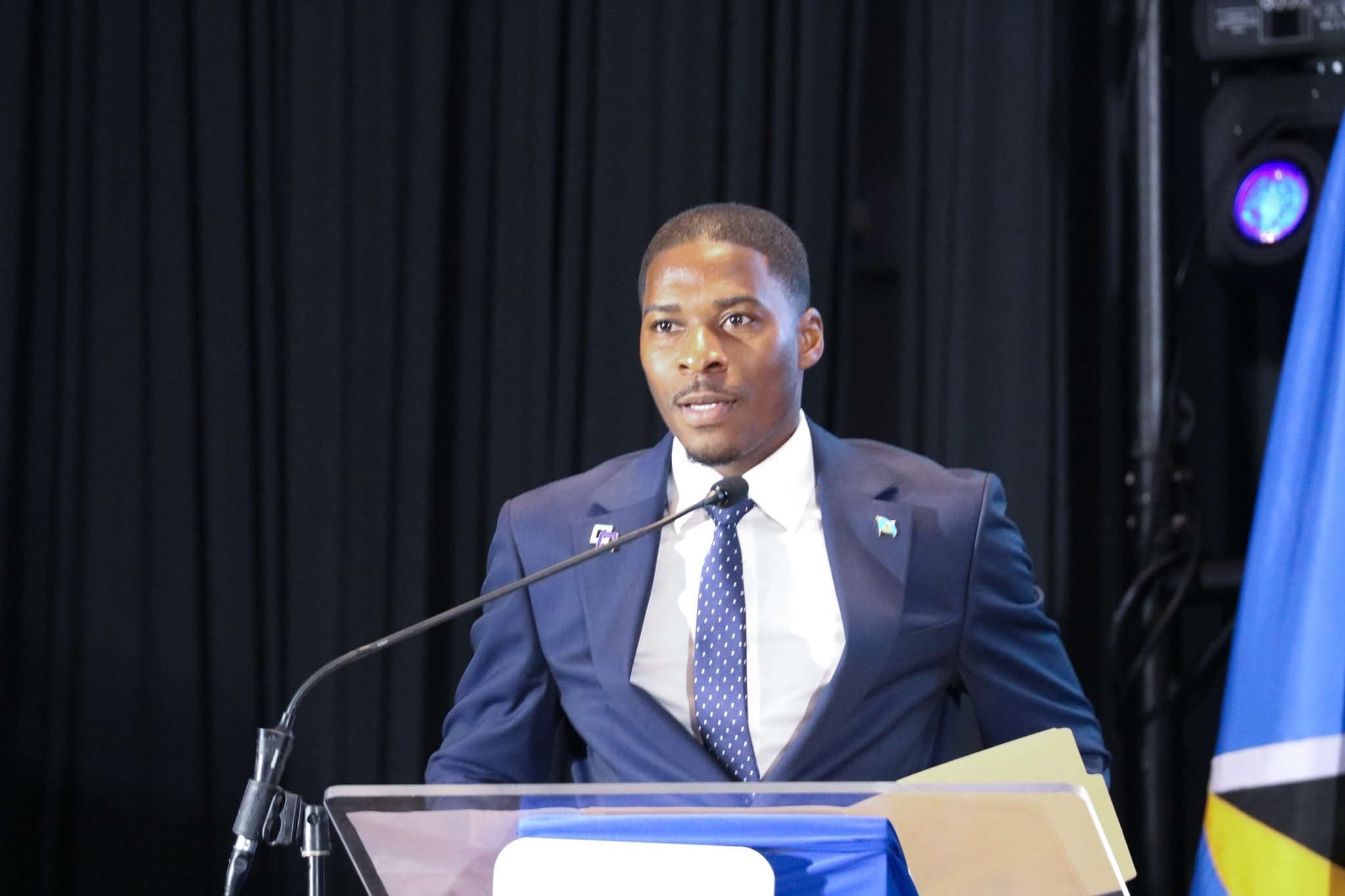
A young Saint Lucian scholar has challenged the leaders of the Caribbean Community to match the ambition and imagination of the region’s youth — delivering the featured address at the opening ceremony of the 51st CARICOM Heads of Government Meeting with a sweeping vision for regional integration that touched on freedom of movement, artificial intelligence, food security, and the existential stakes of Caribbean unity in a fractured world.
“CARICOM Is No Longer Optional — It Is Existential”
Rahym R. Augustin-Joseph, a Caribbean Commonwealth Rhodes Scholar and prominent Saint Lucian youth advocate, opened his address by celebrating what CARICOM has already achieved before pivoting to what it must do next.
He praised the creation of the Caribbean Court of Justice as an institution that ensures justice is “cost-effective, of quality, and accessible to all people, regardless of their socioeconomic circumstance.” He highlighted the University of the West Indies’ role in educating generations of leaders and lifting families out of poverty. And he pointed to the region’s global advocacy on climate change, financial fairness, and reparatory justice as evidence that the Community has already “opened mighty doors” in a changing world.
But his core message was forward-looking — and urgent. “CARICOM is no longer optional, idealistic or solely resident in our reports and commissions; it is existential,” he declared. “If ever there was a time for us to integrate, it is now.”
A Roadmap for Renewal
Augustin-Joseph laid out a series of concrete pathways he described as a roadmap for renewal, each grounded in the lived experience of the region’s young people.
On freedom of movement, he envisioned a CARICOM where citizens can move seamlessly across borders to pursue jobs, education, and opportunity — calling it the heartbeat of integration and the everyday reality that makes regional unity meaningful for young people and families.
On international partnerships, he urged leaders to deepen ties with Canada and Africa beyond seasonal labour and aid, embracing shared prosperity in trade, innovation, and cultural exchange.
On food security, he challenged leaders to treat agriculture not as yesterday’s occupation but as tomorrow’s opportunity, arguing that with fertile land, rich marine resources, and innovative farmers, CARICOM can transform agriculture into a pillar of resilience and prosperity.