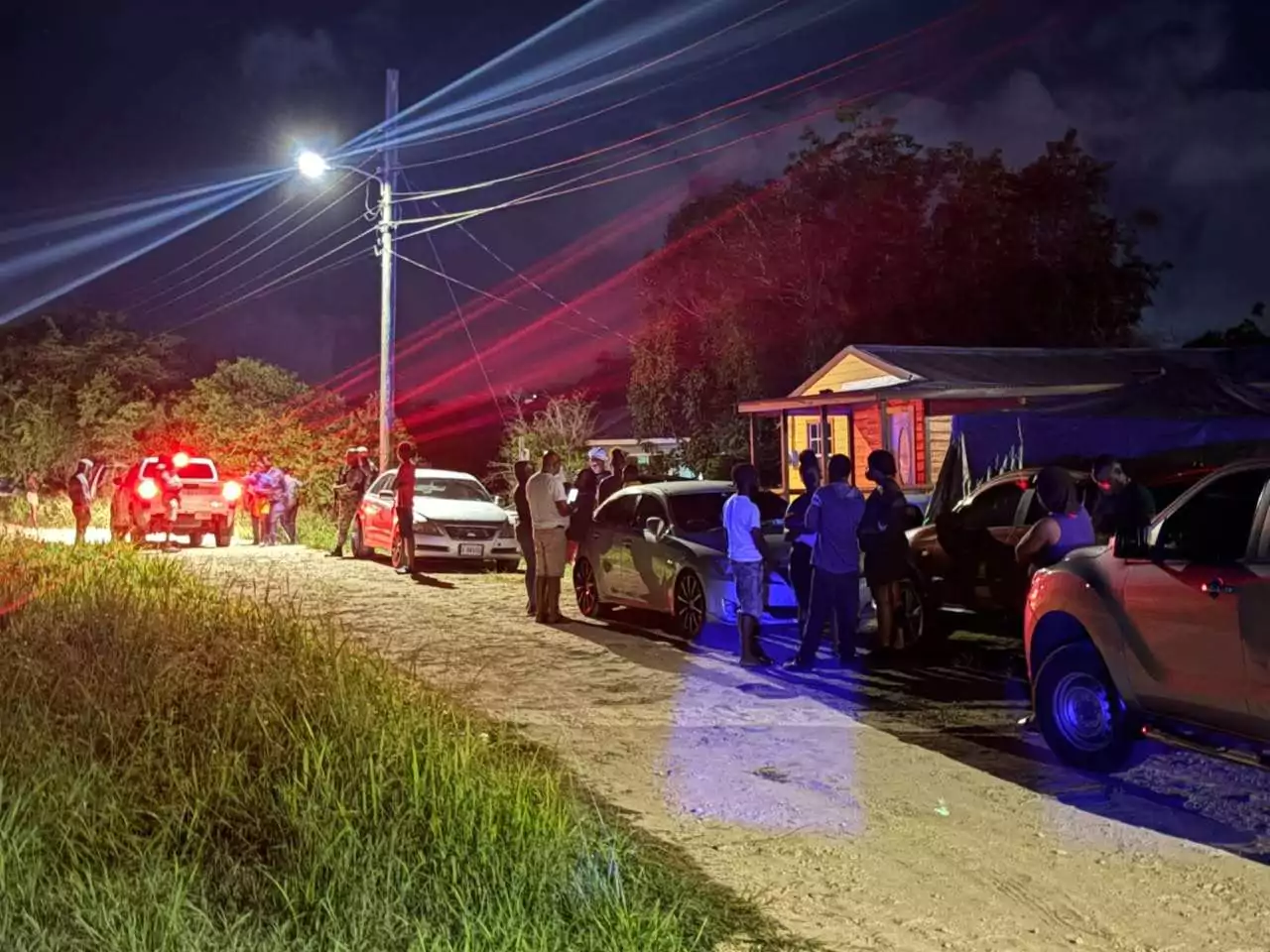
Prime Minister Gaston Browne went on the radio this weekend and told Antigua and Barbuda that it remains one of the safest countries in the Caribbean. He cited approximately four homicides at the halfway point of the year and compared the nation favourably to its OECS neighbours. “I think we have as many as four, and we’re about mid-year. So we’re doing well in the circumstances,” he said.
The public that heard those words had also spent the preceding weeks reading the news. What they read and what the Prime Minister said do not sit easily together.
What the Record Actually Shows
The homicide count alone does not tell the story of public safety in Antigua and Barbuda. A comprehensive account of the violent incidents recorded over that period reveals a country whose residents have legitimate and pressing reasons for fear — not hysteria, not political point-scoring, but the reasonable response of people watching their communities change around them.
A woman was fighting for her life in the ICU after she was found with multiple chop wounds along a roadside in Seaview Farm. A 67-year-old woman was raped in her home in the early hours of the morning by an intruder who forced through her chain lock and threatened to cut her throat. An elderly man in Paradise View was hospitalised after three men smashed through his front door and beat him around midday. A young boy was found with multiple stab wounds following what authorities are investigating as a suspected kidnapping. A man was shot through his vehicle window by a masked gunman on Dickenson Bay Street at four in the morning. Two teenagers were shot by hooded gunmen outside a tattoo shop on South Street on June 27. A 16-year-old was shot in the chest on Armstrong Road at 5:30 in the afternoon on July 1 and remains in critical condition. A 63-year-old man was stabbed in the shoulder with scissors during a gold chain robbery on Armstrong Road. Multiple home burglaries. Multiple business break-ins — three in a single week across Fort Road, Belmont, and All Saints. A man was beaten unconscious and robbed near the West Bus Station. A knifepoint robbery in Lower Ottos was captured on surveillance footage and shared across the island.
And behind all of this, the ten-month unresolved question of when will justice be given to the family of Khaleel Simon — a teenager shot dead on his 18th birthday allegedly by a police officer who has not been suspended, with the coroner’s inquest still not opened despite the investigation being declared complete since March.
Browne’s four homicides are not the measure of what Antigua and Barbuda’s population has been living through.
The Prime Minister’s Explanation
To his credit, Browne did not dismiss the violence entirely. He acknowledged chain-snatching incidents, noted that some perpetrators appear to be teenagers, and pointed to government youth intervention programmes as part of the solution. “We have saved a number of them and reformed them to the extent that many of them now have a skill,” he said.
He also placed the burden of change squarely on citizens. “I just want to encourage our people to continue to resolve their conflicts amicably and not to resort to the type of violence that will result in homicides,” he said.
The instruction to resolve conflicts amicably may be sound advice in the abstract. It is a peculiar response, however, to a crime wave that includes the rape of a 67-year-old woman in her own bed, the shooting of a teenager who was simply walking down a road, and the abduction and stabbing of a child. None of those victims were in a conflict. They were going about their lives.
The Operation Iron Grip Question
The Royal Police Force launched Operation Iron Grip on June 9, with Deputy Commissioner Albert Wade making explicit and ambitious promises: crime in Antigua and Barbuda is predictable, it can be disrupted, and the Force would ensure that criminals could not move from point A to point B without encountering police.
Commissioner Jeffers subsequently reported early results — chain-snatching arrests, a seized firearm, and a high-speed pursuit in Spanish Town that ended in two captures. Those are genuine results.