“Loan again? Where does the tax money go?”
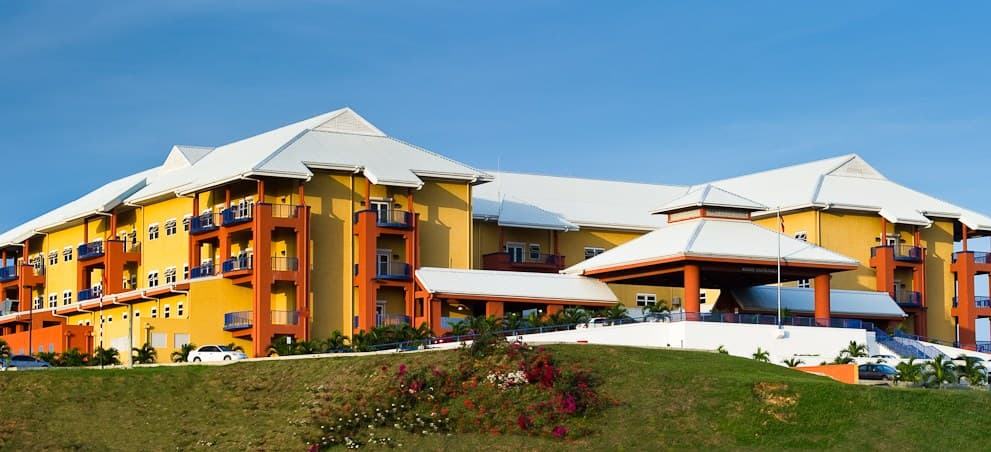
This was how one resident responded to the disclosure, on Thursday morning, that the Gaston Browne Administration will be seeking a loan of $14 million to upgrade equipment and services at the Mount St. John’s Medical Centre.
Citing a recent news article in which the Customs Department reports record-breaking collections, the resident asked what, exactly, the Government spends these revenues on and why borrowing always appears to be its first option.
Given the catalog of equipment it needs to acquire – including an extensive list for vision care alone – the woman asks “how the hospital can consider itself as functioning when, in reality, so many of its tools are non-functional.”
She points out that, at present, the elevators in the four-story hospital are not working, and there is a dearth of supplies ranging from bed sheets to chemicals, such as reagents, forcing patients to supply their own linens and to use private-lab services for basic tests.
Therefore, she is forced to conclude that $14 million will not be enough to meet the needs of the institution.
Meanwhile, even as they note that Cabinet has not named the financial institution from which the money is to be borrowed, other persons are voicing their anxiety about the Administration’s appetite for borrowing and the capacity of the people to repay.
One person points out that Browne and his Cabinet have been “fudging” in relation to unpaid backpay that some civil servants had been expecting since last December. He refers, as well, to the recent demands for payment by persons hired by the Ministry of Public Works just before the April General Election – concluding that “Government hab money problem.”
Accordingly, these citizens are concerned about the taxpayers’ ability to repay other borrowings – actual or planned – such as the funds for The UWI Five Islands expansion; the conversion of the Deluxe Cinema into a performing arts centre; and the upgrade of the airport.
Two weeks ago in Parliament, Finance Minister Gaston Browne told Opposition Leader Jamale Pringle that a $100 million loan for road rehabilitation – reportedly secured last year through several banks – has not yet been drawn down.
That admission sparked suspicion in several quarters, prompting some residents to suspect that the loan was never even approved.
A supposed dedicated fund for repayment was established in April 2025 when owners began paying an additional 40 percent in vehicle-licensing fees. Fourteen months later, no appreciable road works have been completed, as even the All Saints Road – identified as “the worst” highway in the country – remains incomplete.
The residents’ fears and concerns cannot be dismissed. After all, it was only last week that Prime Minister Browne admitted that Antigua and Barbuda is likely to lose its visa-free access to the European Union by year-end. There are fears that the United Kingdom could follow suit, while Canada already pulled that plug several years ago.
And with the current visa ban and bond imposed on Antigua and Barbuda by the US State Department, many locals are declaring the Citizenship by Investment Programme (CIP) as good as dead.
Its death would mean the loss of millions in non-tax revenues for the country.
Meanwhile, other sources note that the recently disclosed US$50 million fraud and money-laundering scandal out of St. Kitts could affect the local banking industry, as an investigation into this matter is currently underway.
Two of the players at the centre of the scandal have been linked to a local bank in which the Government holds majority shares that the Administration was hoping to sell and realize a cash injection of US$100 million.
It is believed that the investigation into the St. Kitts scandal could very well scuttle the chances of the sale being consummated. Worse, the sources add, if any penalties arise out of the investigation, they will have to be borne by the majority owner of the bank – the taxpayers of Antigua and Barbuda.